

Some memories arrive through photographs. Mine occasionally arrive wrapped in banana leaves.
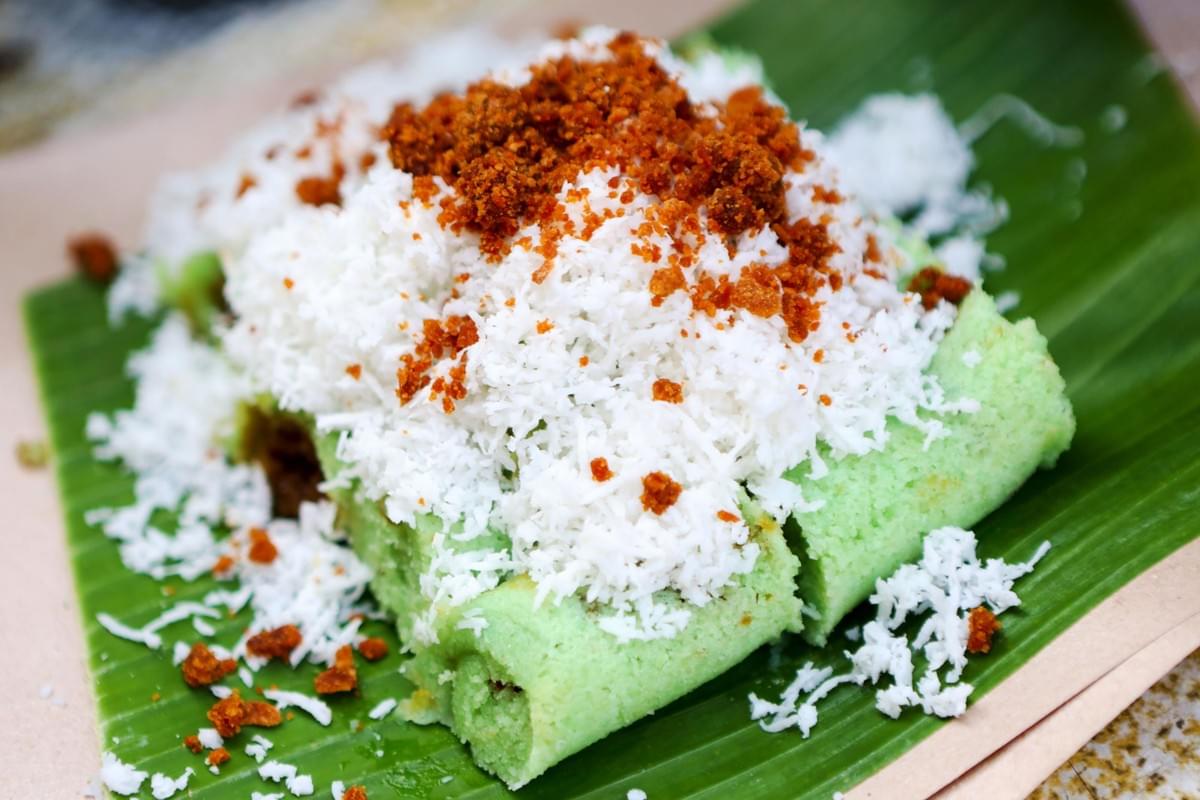
I remember opening a piece of kueh as a child and noticing the fragrance before anything else—that unmistakable meeting of coconut and pandan, grassy and sweet, with a little gula melaka hiding somewhere inside. The kueh was soft and yielding between my fingers, slightly sticky in that wonderful way that guaranteed at least a few crumbs would follow me home.
Back then, dessert was simply dessert. I wasn't thinking about heritage. I certainly wasn't wondering why rice flour, coconut milk, palm sugar, and pandan appeared in so many different forms across Singapore.
Growing older—and attempting a few traditional sweets in my own kitchen—changed that.
Making kueh taught me that simplicity can be deceptive. A recipe might contain only a handful of ingredients, but texture is everything. Too much liquid and the mixture refuses to set properly. Steam it too long and that delicate chew becomes stubborn. Even coconut needs attention: rich enough to satisfy, but not so heavy that it buries the fragrance underneath.
My early attempts were not particularly elegant. One batch looked less like carefully layered kueh and more like a geological accident. It still tasted good, which I considered a small victory.
What fascinates me now is how these sweets carry traces of the communities that made Singapore home. Malay, Peranakan, Chinese, Indian and Eurasian traditions have each contributed desserts shaped by local ingredients, migration, family kitchens and celebration. For anyone meeting these traditions for the first time, A beginner’s guide to Nyonya Kueh in Singapore offers a helpful way into the colours, textures and stories behind them. Look across a table of kueh and you aren't seeing one neat culinary history. You're seeing generations adapting techniques and flavours to the place around them.
That is something I keep returning to at My Taste of Singapore: heritage doesn't always announce itself with grand ceremonies. Sometimes it is sitting quietly beside your kopi, dusted with coconut.
Perhaps that is why traditional sweets still matter. Their colours catch our eyes first—the bright green of pandan, the deep amber of gula melaka—but their real sweetness comes later.
It arrives when someone recognises a childhood favourite. When a grandmother corrects a recipe without consulting a scale. When you bite into something you've eaten countless times and suddenly wonder who taught the first person in your family to make it.
Heritage, I've learned, can be surprisingly sweet.
And sometimes, it fits neatly into the palm of your hand.
💌 With curious taste buds,
Simon Lee’s Flavor Notebook
