

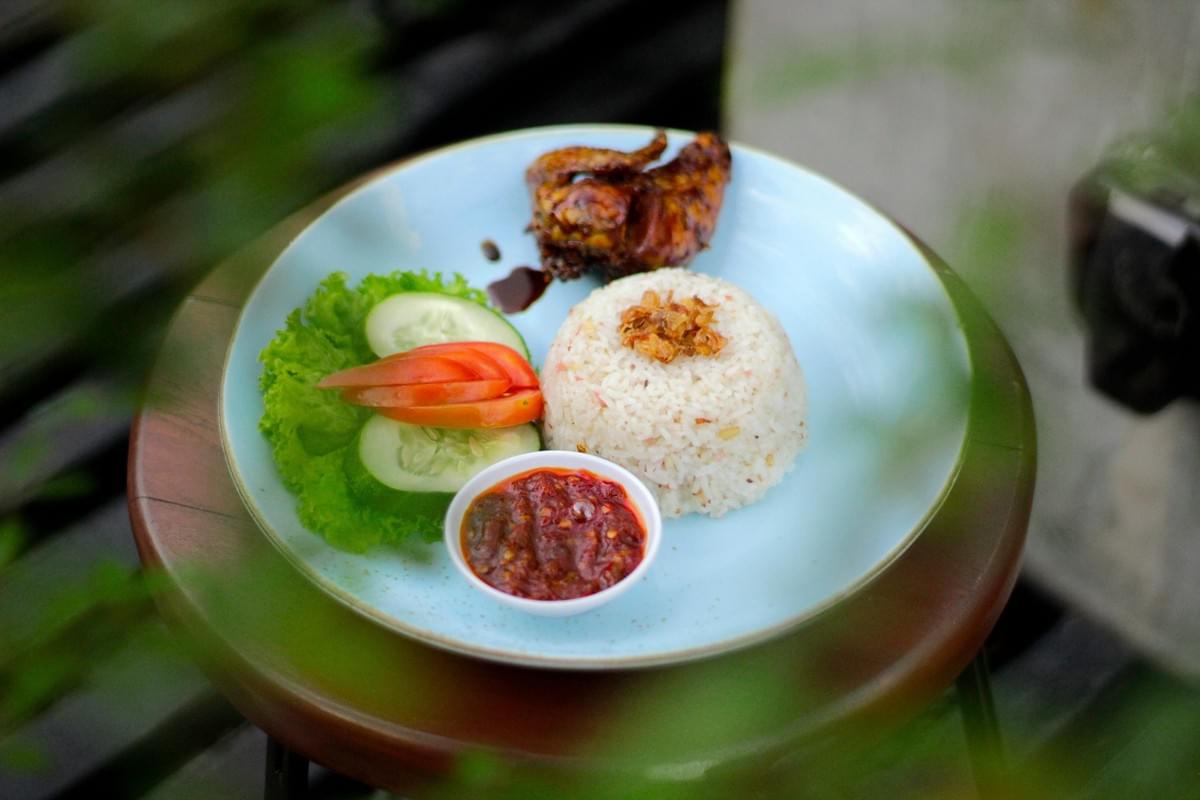
Hainanese chicken rice is one of Singapore's most celebrated national dishes: poached chicken served over aromatic rice cooked in chicken fat and chicken stock, traditionally served with chilli sauce, dark soy sauce, and a clear chicken broth on the side. Though its roots trace back to Hainan, China, the Singapore chicken rice you'll find at most hawker centres and restaurants today has evolved into something distinctly its own.
I still remember the first time I really paid attention to a plate of chicken rice. I was sitting at a hawker stall in Maxwell Food Centre (known for housing Singapore's oldest heritage hawker stalls), watching the auntie behind the counter chop a whole chicken with the kind of speed and precision that only comes from decades of repetition. That's when it hit me: this "simple" dish of chopped chicken and rice is anything but simple. There's technique in every step, and history baked into every grain. As a food writer who's spent years exploring how Singapore's favorite foods evolved, hainan chicken rice has always fascinated me the most.
So let's get right into its history, heritage, and hallmark.
Is Hainanese Chicken Actually from Hainan?
Yes, in origin, but not in the form Singaporeans eat today. Hainanese chicken rice descends from a dish called Wenchang chicken, named after Wenchang City on Hainan Island in southern China. Hainanese immigrants brought the concept to Southeast Asia in the 19th and early 20th centuries, and over decades, local hawkers adapted it with new ingredients and Cantonese cooking influences. You can see that cross-cultural exchange in two telling details: the use of younger, more tender chickens, and the practice of finishing the poached chicken in cool water—a Cantonese technique, not a Hainanese one.
The original Hainan chicken tends to be simpler, often served at room temperature with a lighter dipping sauce. The Singapore version, by contrast, layers on more flavor: chicken rice enriched with rendered chicken fat and broth, a punchier chilli sauce sharp with minced garlic and lime, and dark soya sauce for savory depth. What makes Singapore's Hainanese chicken rice dish so special is that it's not a copy of the original dish; it's a reinterpretation shaped by generations of hawkers and Hainanese chefs who kept adjusting until they got it just right. That's also why you'll sometimes see it marketed simply as "chicken rice" or nasi ayam on menus.
Simon Says: I'd point out that nasi ayam isn't automatically synonymous with Hainanese chicken rice. Nasi ayam is a broader Malay term for chicken-and-rice dishes generally, and can refer to different preparations with different cooking styles, marinades, and rice bases.
What Makes a Good Plate of Hainane
Use Chicken Rice?
I've eaten enough plates of this iconic dish to have strong opinions, so here's what I look for, and what I think separates the best rice from the average:
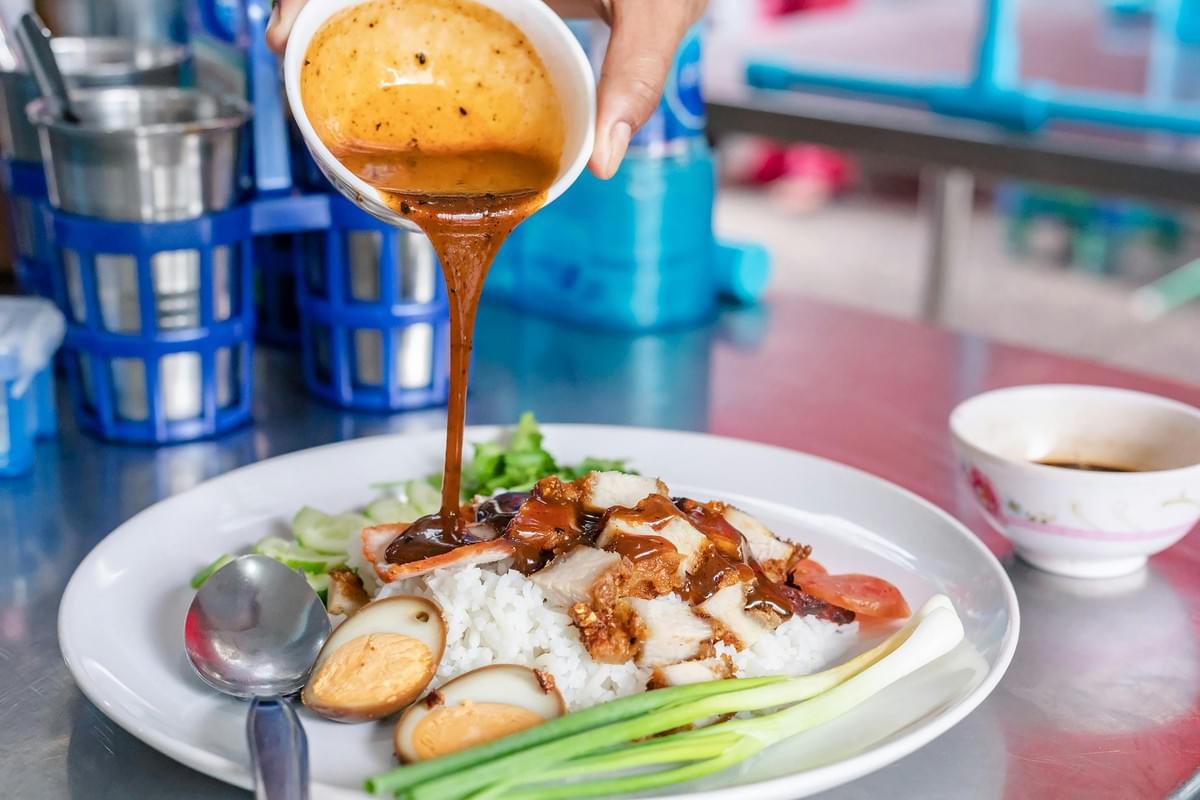
- Chicken: Fully cooked, moist, smooth jelly-like skin, clean chop
- Rice: Separate grains, fragrant with chicken flavour, not greasy
- Chilli sauce: Sharp, garlicky heat balanced with acidity
- Dark soy sauce: Savory and slightly sweet, not just salty
- Clear chicken broth: Light, clean, and properly seasoned; not an afterthought
I'd suggest judging a stall by its chicken soup first, and its chicken breast second. Chicken breast is the hardest cut to get right as it dries out faster than thigh or drumstick, and a stall that keeps it with just the right amount of moist and tender is one that takes the cooking process seriously. If the breast is chalky, walk past. And don't confuse light soy sauce with dark soy sauce; they serve different purposes. Light soy is saltier and used more for seasoning; dark soy is thicker and richer, which is why it gets drizzled over the chopped chicken rather than mixed into the cooked rice.
Mistakes to Avoid When Eating Hainanese Chicken Rice in Singapore
Even as a seasoned foodie, there are some common mistakes to avoid to fully appreciate the authentic flavors and textures of Singapore's beloved Hainanese chicken rice:
- Mistaking the ice bath for a safety step. It is actually a texture technique to lock in moisture and create silky, smooth chicken skin. The ice bath stops the cooking process, locks in the juices, and gives the chicken skin better texture. Trust that the chicken is fully cooked before it reaches your plate.
- Expecting all chicken rice to be the same. Not all "chicken rice" is Hainanese chicken rice. Some stalls serve roasted chicken or soya sauce chicken, which offer different flavors and textures. Knowing what you want helps you choose the right dish.
- Overlooking the rice. The rice is just as important as the chicken. Look for fragrant jasmine rice cooked in rich chicken stock and chicken fat, not plain or dry rice.
- Ignoring the sauces. The trio of chilli sauce, ginger-minced garlic sauce, and dark soy sauce are essential flavor boosters. Don’t be shy to mix and match to find your perfect balance.
- Skipping the chicken broth. A small bowl of clear chicken broth served alongside is traditional and adds a comforting, savory element to your meal.
- Ordering without cucumber or fresh herbs. Fresh cucumber slices, a sprinkle of coriander leaves and spring onions, and pandan leaves (on top of rice) add refreshing contrast and elevate the dish.
Avoiding these common eater mistakes will ensure your next Hainanese chicken rice meal in Singapore is a truly memorable and authentic experience. Savor each element, and you’ll understand why this dish is a national treasure.
FAQs: Becoming a Hainanese Chicken Rice Connoisseur
Is Hainanese chicken rice Singapore’s official national dish?
Not officially, but it’s the beloved culinary crown jewel that Singaporeans proudly claim as their own, a dish so iconic it’s practically the island’s edible ambassador.
How much should I expect to pay for a plate of authentic Hainanese chicken rice?
At hawker centres, a plate will set you back about S$5 to S$9, less than a fancy coffee but infinitely more satisfying. Upscale spots might ask for a bit more, but the flavor justifies every cent.
What’s the perfect side dish to this chicken-and-rice meal?
Crisp cucumber slices, tangy homemade achar, and a steaming bowl of seasoned chicken broth are, I would say, the ultimate supporting cast that turns this meal into a masterpiece.
Why cook rice in concentrated chicken stock?
Because plain water is boring. Cooking jasmine or basmati rice in chicken stock infused with rendered fat transforms humble grains into buttery, flavor-packed clouds of delight.
Food processor or mortar and pestle for the sauces?
Either works, but a food processor is the speed demon that finely chops ginger, garlic, and chilies into silky sauces that sing.
From Chicken-Fat Rice, Down to the Chicken Bones
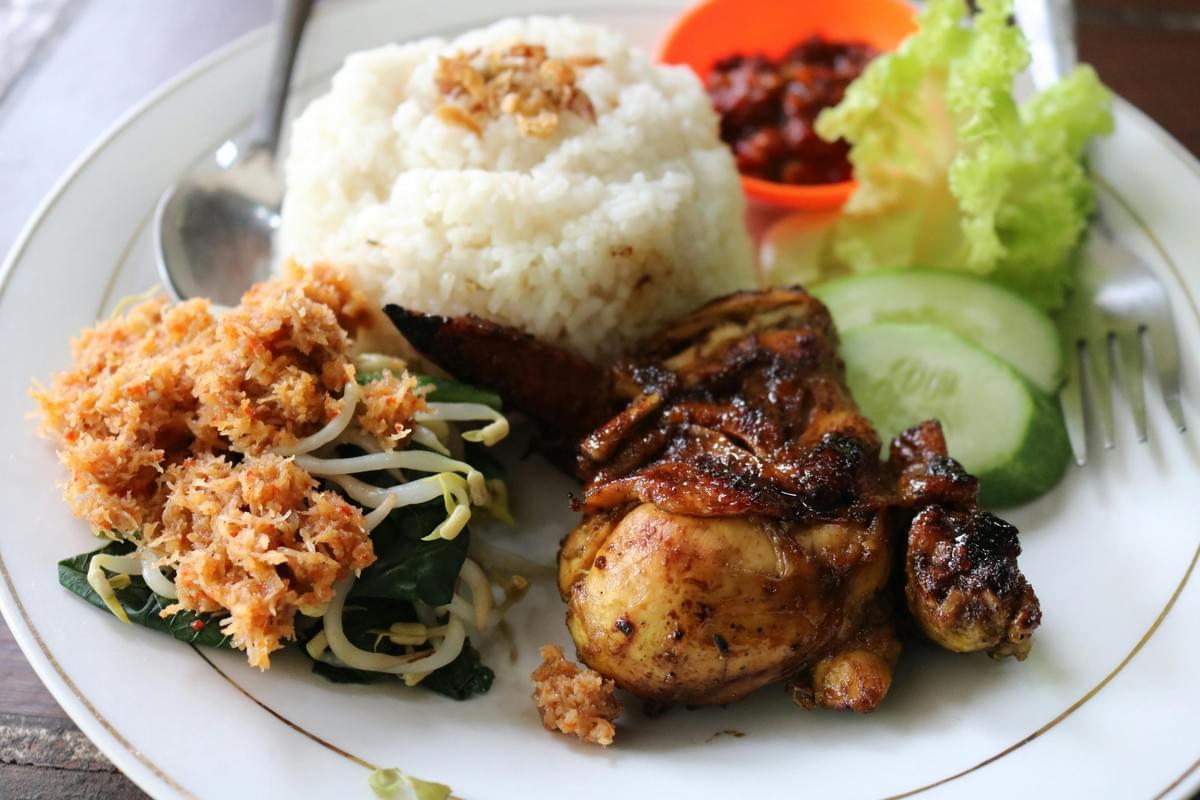
Hainanese chicken rice is a dish that rewards the curious. Once you start paying attention to the rice, the broth, the chilli, the sesame oil, and the precision of the chop, you realize how much craft is packed into what looks like a humble hawker food plate. Every stall tells a slightly different version of the same story: that variation is exactly what makes eating chicken rice in Singapore so endlessly interesting.
Whether you're exploring chicken rice stalls for the first time or trying your hand at a Hainanese chicken rice recipe at home, I'd encourage you to slow down and taste each element separately. That's when it stops being just Chinese cuisine at a hawker centre, and starts being one of the most layered, culturally rich dishes this island has ever produced.
If you want to explore more of Singapore's hawker food culture and most beloved dishes, My Taste of Singapore has a growing library of deep-dives worth bookmarking.
