

The first sound was the metal ladle striking the side of the pot, sharp, hollow, and strangely comforting. Then came the smell: garlic oil, soy sauce, and the soft savoury steam rising from a bowl of noodles I had not yet ordered. I was standing in front of the Maxwell Food Centre stall, wallet half out of my pocket, when the hawker looked up and said, “Same one?”
I laughed because he was right.
Same one. Dry noodles. Extra chilli. Less vinegar. A spoonful of soup on the side, just enough to warm the throat but not drown the meal. It was such a small thing, almost nothing in the grand theatre of Singapore food, and yet it stopped me for a moment. In a city where we are always tapping, rushing, queueing, and moving toward the next thing, someone had remembered how I liked my lunch.
The stall was tucked into one of those hawker centres that wakes up before the rest of us. By late morning, the floor was already slick from melted ice and spilled soup, the ceiling fans were doing their best, and every table seemed to hold its own little universe. Office workers leaned over kopi. Retirees read newspapers with one hand and stirred porridge with the other. Somewhere behind me, a wok roared to life, sending out that smoky breath that makes everyone turn their head, even if only for a second.
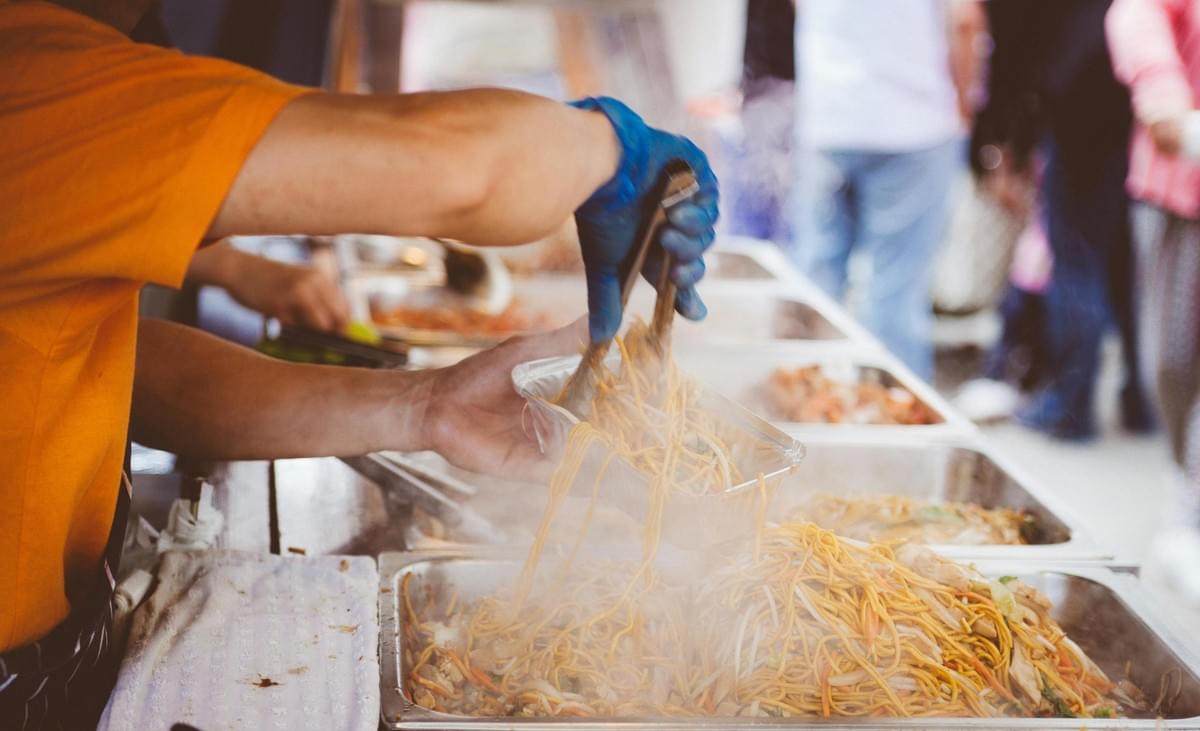
The hawker moved like someone who had done this thousands of times, because he had. Noodles dipped into boiling water, shaken loose, then tossed into the bowl with dark sauce and chilli. A quick flick of the wrist. A scatter of spring onions. Slices of fishcake arranged without ceremony but with surprising care. Nothing was wasted, nothing was overthought. It was muscle memory, but also hospitality.
I remember watching his hands and thinking how much knowledge lives in gestures like that. The timing of noodles is not written on a recipe card. The correct amount of sauce is not measured with a spoon. The heat of the soup, the tenderness of the meat, the balance between salt, spice, and sweetness, these things are learned through repetition, through long mornings, through customers who come back again and again.
When the bowl landed in front of me, it looked exactly as I hoped it would. The noodles were springy and slightly glossy, the chilli bright and rough-edged, the soup clear but fragrant, carrying the gentle sweetness of bones and patience. I mixed everything together slowly, letting the sauce cling to each strand. The first bite had that familiar pull, soft, spicy, savoury, and deeply ordinary in the best possible way.
That is something I love about eating in Singapore. We often talk about famous stalls, long queues, awards, and “must-try” dishes. Those things matter, of course. But sometimes, the real magic sits quietly in the relationship between a regular customer and the person behind the counter. No grand speech. No dramatic story. Just a nod, a question, and a bowl prepared the way someone remembers you like it.
Hawker culture is built on food, but it survives through familiarity. The auntie who knows you want less sugar in your kopi. The uncle who remembers you always take extra sambal. The stallholder who notices when you have not appeared for a while and asks, almost casually, “Busy ah?” These little exchanges are part of the meal too. They season the food with belonging.
I think this is why hawker centres feel different from restaurants. A restaurant may impress you, but a hawker centre can absorb you into its rhythm. You become part of the morning crowd, the lunch rush, the quiet lull after two o’clock. You learn which stall closes early, which table gets the breeze, which uncle will joke with you if you show up often enough. Over time, the space becomes less like a place you visit and more like a place that recognises you.
That day, I finished my noodles slower than usual. Not because I was full, but because I wanted to sit with the feeling a little longer. The soup had cooled by then, the chilli had settled at the bottom of the bowl, and the lunch crowd was beginning to thicken around me. Still, there was comfort in it,the clatter, the steam, the shouted orders, the aunties wiping tables with swift, circular motions.
Before I left, I returned the tray and gave the hawker a small nod. He was already preparing the next bowl, already moving on, already remembering someone else’s order. That, too, felt right.
Food in Singapore is often described as bold, layered, and full of history. It is all of that. But sometimes, it is also quiet. Sometimes it is a bowl placed in front of you before you finish speaking. Sometimes it is the warmth of being known, even briefly, by someone who feeds half the neighbourhood before noon.
And maybe that is what I carried with me that day, not just the taste of noodles and chilli, but the reminder that food culture is not only preserved in recipes. It is preserved in repetition, in memory, in the small kindness of someone saying, “Same one?” and getting it exactly right.
💌 With curious taste buds,
Simon Lee’s Flavor Notebook
