

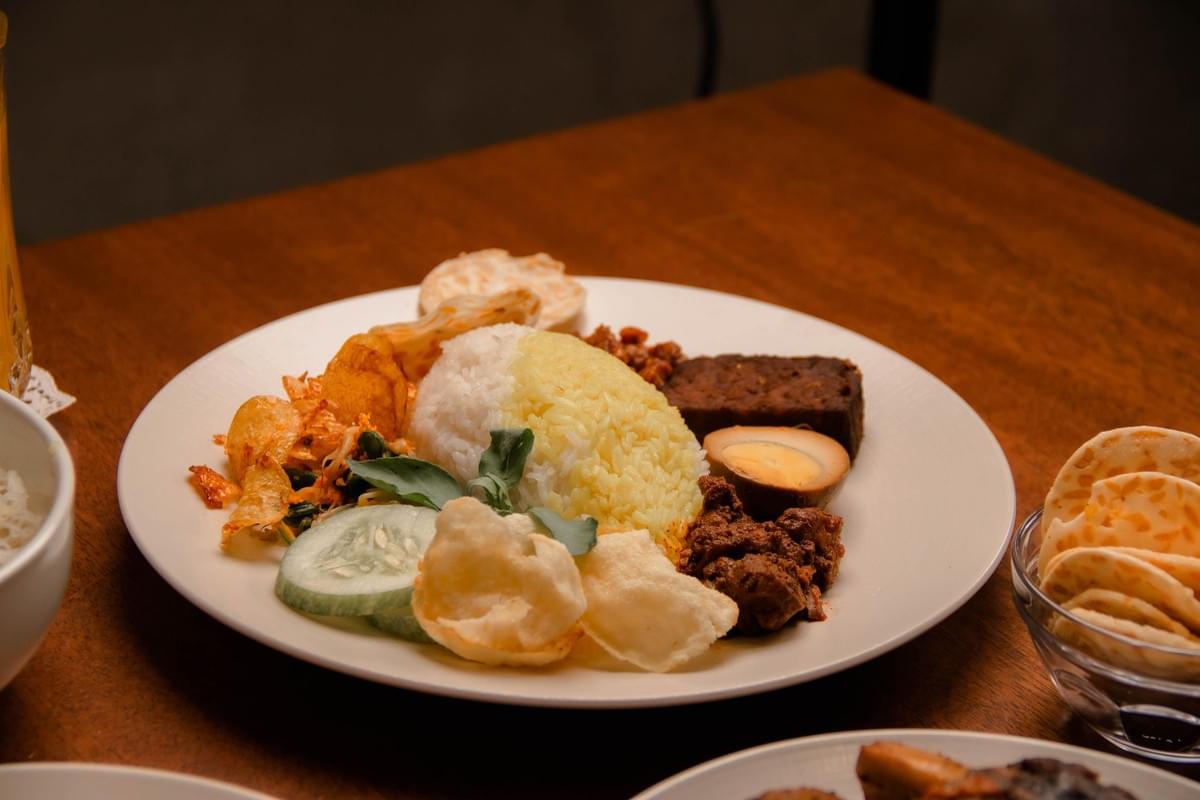
I still remember the first time an uncle behind a nasi padang counter caught me hesitating over a tray of dishes I couldn't name. "Just ask," he said, nudging a bowl of gulai toward me. "That's how you learn." Years later, I think that's still the best advice anyone's given me about this cuisine. Nasi padang rewards curiosity, not confidence.
What strikes me every time I sit down to a plate is how much history is packed into something that looks, at first glance, like a simple rice meal with sides. This isn't a Singaporean invention dressed up in heritage language. It's a living tradition that travelled here from West Sumatra and found a permanent home among our hawker stalls, our family-run eateries, and our everyday lunch routines.
What Is Nasi Padang, Beyond Rice and Side Dishes
?
Nasi padang refers to a style of serving rice alongside a wide spread of pre-cooked dishes displayed in a glass case, letting diners point and choose exactly what they want. The term comes from Padang, the capital of West Sumatra, and the cuisine itself belongs to the Minangkabau people of that region.
I'd push back gently on anyone who assumes beef rendang is a mandatory part of every nasi padang meal. It isn't. A proper spread might include ayam gulai, ikan bakar, sayur lodeh, and a dozen other dishes depending on the stall and the day. Rendang is iconic, sure, but it's one great star in a much bigger constellation.
Simon Says: Minangkabau, Malay, and Indonesian aren't interchangeable terms, even though I've heard them used loosely. Minangkabau refers specifically to the ethnic group and culinary tradition from West Sumatra. Treating them as synonyms flattens a distinction that actually matters to the people who carry this food forward.
From West Sumatra to Singapore's Everyday Tables
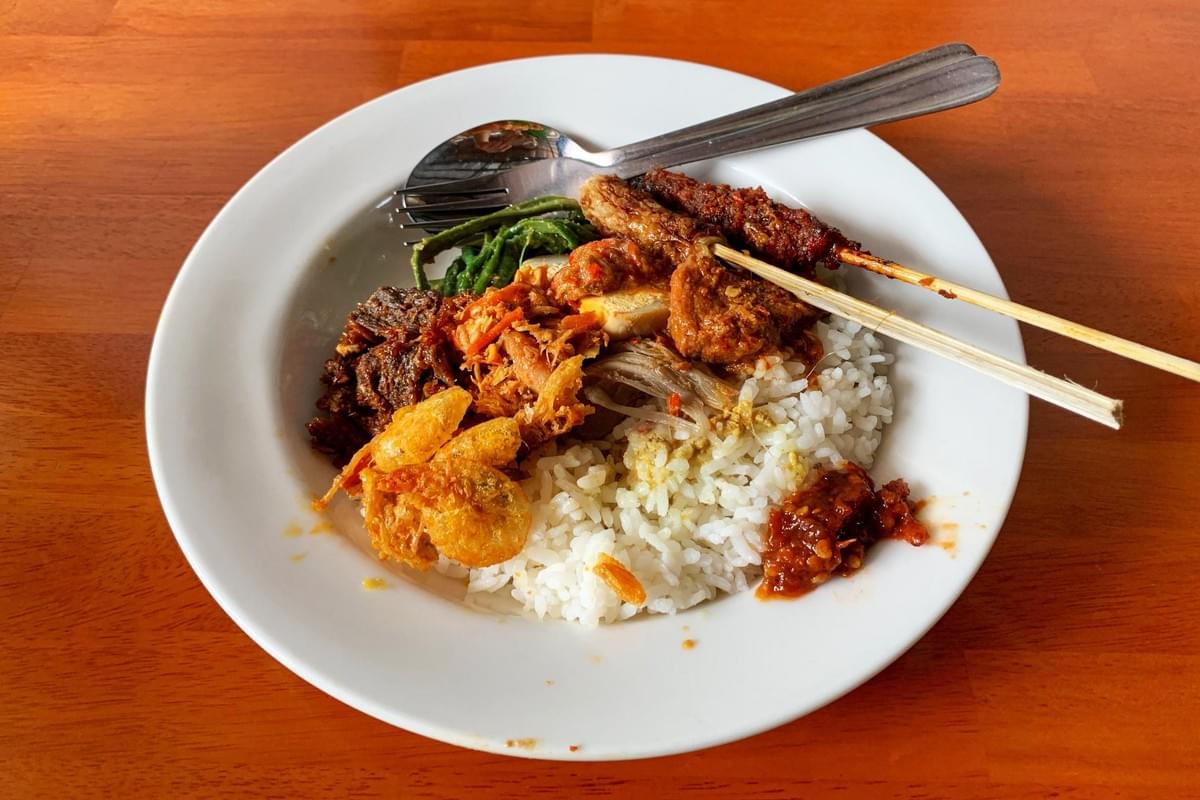
Nasi padang arrived in Singapore through the same trade and migration routes that shaped much of Kampong Gelam's food history, where Minangkabau families settled alongside Malay, Arab, and Bugis communities near the old port. I think that's worth sitting with for a moment: this wasn't a dish invented to serve tourists or satisfy a gap in the market. It came with people, recipes memorised through years at the stove, and a determination to keep cooking the way their mothers and grandmothers did.
Over decades, those recipes adjusted, sometimes sweeter, sometimes milder, to suit Singapore's more diverse diners. According to the National Heritage Board, Hazmi Zin of Rumah Makan Minang has spoken about his grandmother sweetening her asam pedas for local palates while keeping her rendang closer to its traditional Minangkabau form. I don't read that as compromise. I read it as exactly how food heritage survives: by bending without breaking.
Why Rendang, Gulai, and Sambal Taste So Different
- Rendang: Slow-cooked in coconut milk and spices until the sauce reduces and concentrates, resulting in dark, aromatic meat deeply coated in thick sauce.
- Gulai: Meat, fish, or vegetables simmered in spiced coconut gravy, creating a rich, soupier consistency with golden or reddish hues.
- Balado/Belado: A coarsely pounded chilli-based preparation with visible chilli pieces and a savoury, spicy flavour.
- Ayam Bakar: Marinated chicken grilled until the skin browns and the edges char slightly, developing a smoky aroma.
Every one of these starts with rempah, the pounded spice paste that forms the backbone of Minangkabau cooking. What I find genuinely fascinating is how the same handful of aromatics, galangal, turmeric, lemongrass, shallots, change character and quality entirely depending on how long they cook and in what liquid. Rendang's rempah gets cooked almost dry, concentrating everything into something dense and dark. Gulai keeps its rempah loose in gravy, so the flavour stays brighter and more fluid. It's the same vocabulary, spoken in different tenses.
How We Choose What to Eat at a Nasi Padang Stall
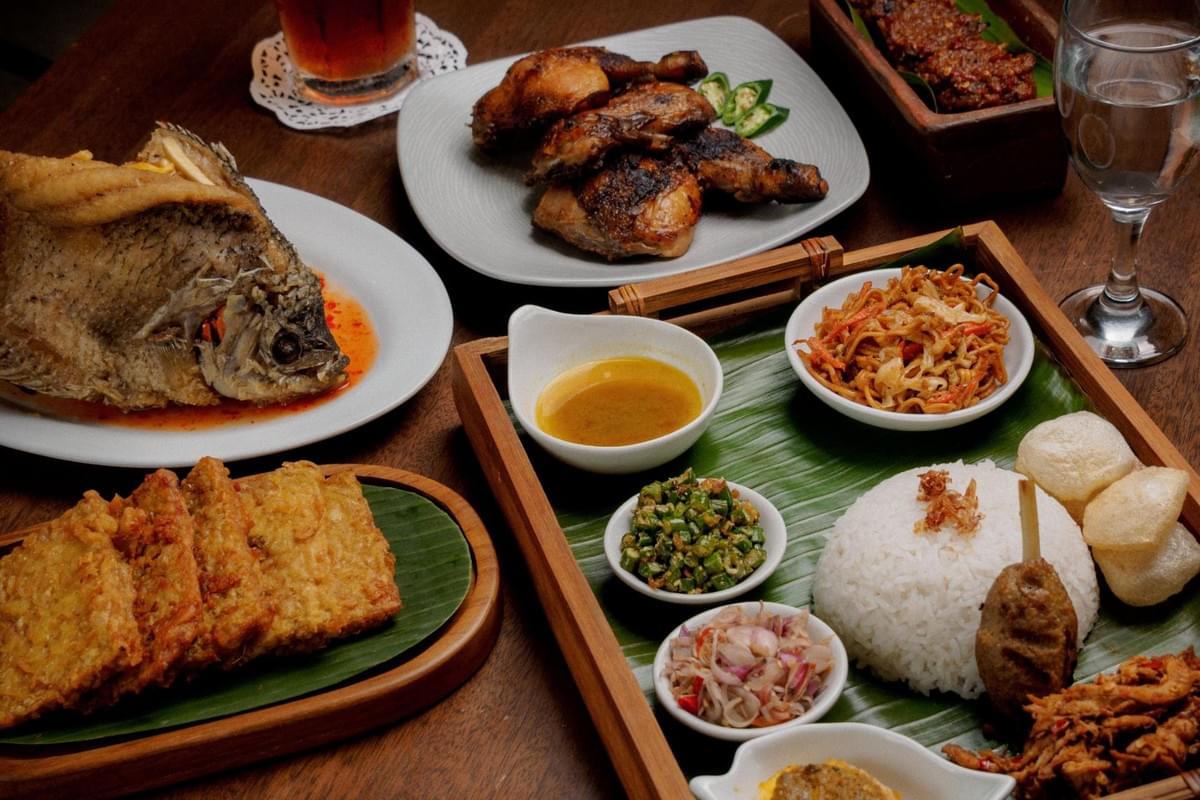
If you're new to this, here's the ordering vocabulary I'd keep in your back pocket:
- Nasi: Rice
- Rendang: Slow-cooked spiced meat
- Ayam Bakar: Grilled chicken
- Ayam Gulai: Chicken in gulai gravy
- Sambal: Chilli condiment
- Belado/Balado: Coarse chilli preparation
- Paru: Beef lung
- Sayur: Vegetables
- Ikan: Fish
- Daging: Meat
Simon Says: Ask about pricing before your plate gets assembled, especially once you start pointing at multiple meat or seafood dishes. Prices at nasi padang stalls vary quite a bit, and it's far easier to adjust your order upfront than to be surprised at the till.
Also worth knowing: not every nasi padang stall carries halal certification, even if the cuisine's roots are Muslim Minangkabau. If that matters to you, check directly with MUIS rather than assuming.
Rumah Makan Minang and the Recipes Passed Through Families
Rumah Makan Minang, on Kandahar Street, traces its roots to a family kitchen from the 1950s, though the restaurant as it's known today only took shape in the early 1980s. I think that gap matters. It tells you the recipes existed long before the signage did, carried through a family's daily cooking before they ever became a business.
That pattern repeats across Kampong Gelam's nasi padang scene, where family-run kitchens have quietly carried Minangkabau techniques through generations, the same way Singapore's hawker heritage elsewhere depends on recipes and timing absorbed at the stove rather than written down.
What Warong Nasi Pariaman's Closure Tells Us About Food Heritage
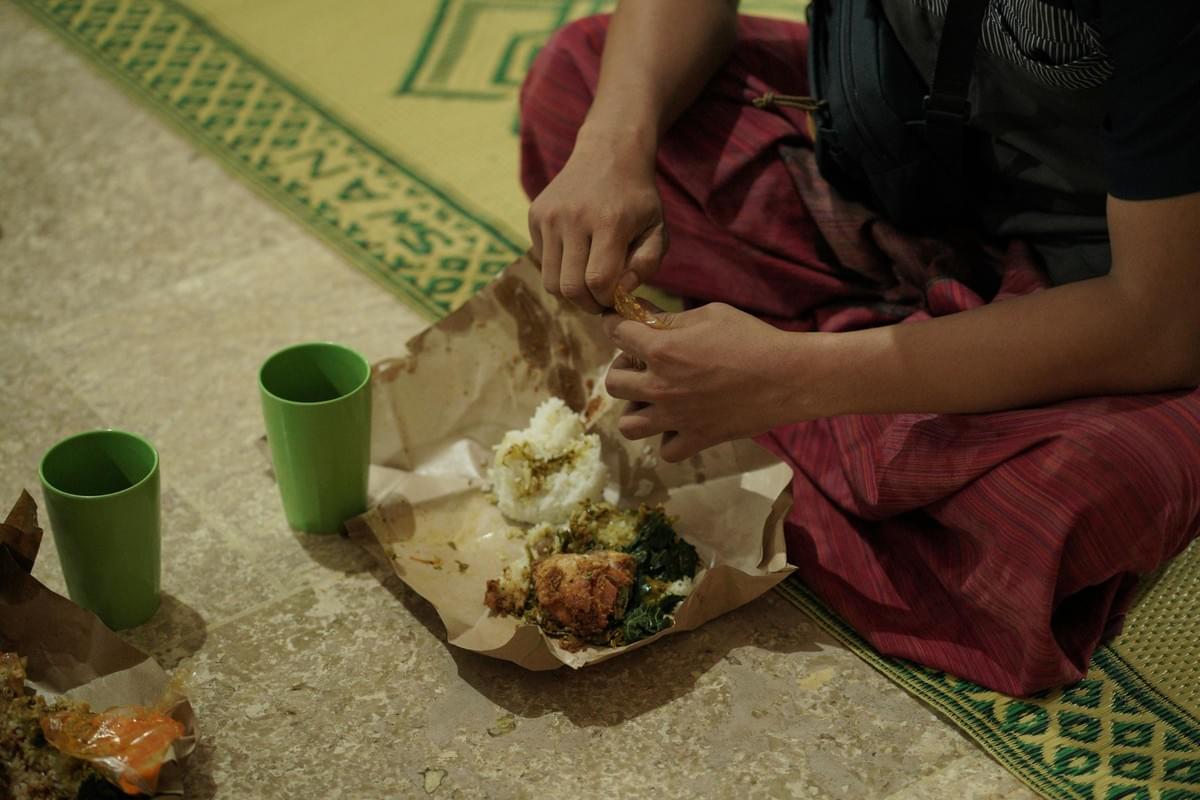
Warong Nasi Pariaman opened in 1948 on North Bridge Road, founded by Haji Isrin, who came from Pariaman in West Sumatra. After 78 years, it closed permanently on 31 January 2026. Singapore's Ministry of National Development has stated that high rent was not the cause of the closure, which I think is an important correction to make, since it's the easy assumption.
The family later held a three-day food festival pop-up in July 2026. I want to be clear that this wasn't a reopening, just a brief, bittersweet appearance. A closure like this doesn't erase 78 years of cooking, but it does remind me how fragile these family-run threads of heritage actually are, dependent on specific people, specific kitchens, and specific decisions about whether to keep going.
How Nasi Padang Became Part of Everyday Singapore
What moves me most about nasi padang isn't any single dish. It's Mhow naturally it has become part of everyday Singaporean life. Rooted in the inangkabau traditions of West Sumatra, nasi padang found its place through migration, family-run kitchens, and Singapore's Malay-Muslim communities. Over generations, recipes evolved to suit local tastes while preserving their distinctive spices and cooking techniques. A visit to a neighbourhood stall might mean choosing between popular dishes such as tender beef rendang, ayam gulai, and vegetables, with rice and gravy bringing everything together.
Yet what makes nasi padang meaningful is how easily it fits into ordinary routines, from a quick lunch to a family gathering. Like the rest of Singapore's food heritage, its significance lies not only in the recipes but also in the people and memories connected to them.
The Meaning of a Plate We Choose for Ourselves
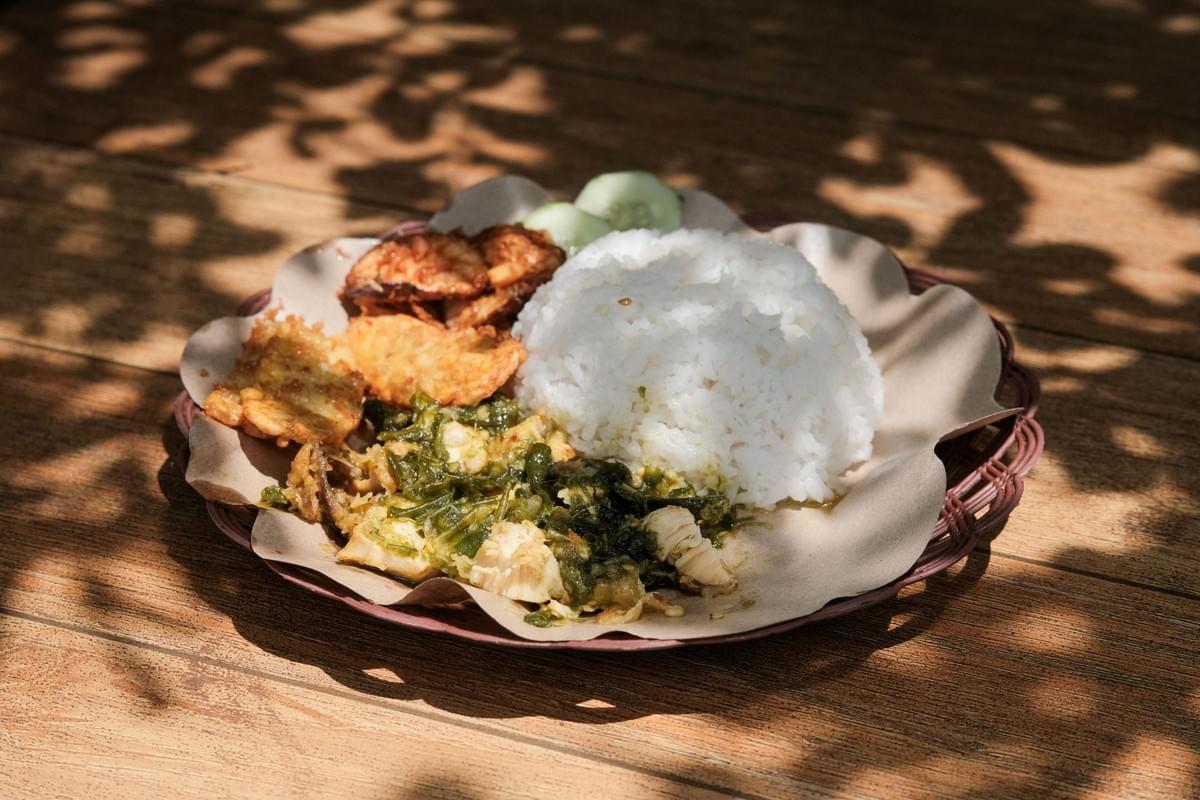
I keep coming back to that first lesson: slow down, taste one thing at a time, ask questions. Nasi padang isn't a dish you can rush through or summarise in a single bite. It's a cuisine built on choice, patience, and recipes that survived migration, adaptation, and now, in some cases, closure. Every plate you build at the counter is small proof that this heritage is still being cooked, one family kitchen at a time.
FAQs: Eat Nasi Padang the Ideal Way
- Is beef rendang always included in a nasi padang meal?
No. Rendang is a popular choice, but a nasi padang spread typically includes many dishes, such as gulai, ayam bakar, and sambal, and diners choose what they want rather than receiving a fixed set. - Is nasi padang the same as Malay food?
Not exactly. Nasi padang originates from the Minangkabau tradition of West Sumatra, Indonesia. It shares a region and some ingredients with Malay cuisine, but the two culinary traditions are distinct. - Are all nasi padang stalls in Singapore halal-certified?
Not necessarily. If halal certification matters to you, check with Singapore's Islamic Religious Council (MUIS) rather than assuming based on the cuisine's origins. - Why did Warong Nasi Pariaman close?
The stall closed permanently in January 2026 after 78 years. Singapore's Ministry of National Development has stated that high rent was not the reason behind the closure. - How much does a nasi padang meal typically cost?
Prices vary by stall and by how many dishes you select. It's best to confirm the price of each item before your plate is assembled, particularly for meat or seafood dishes.
