

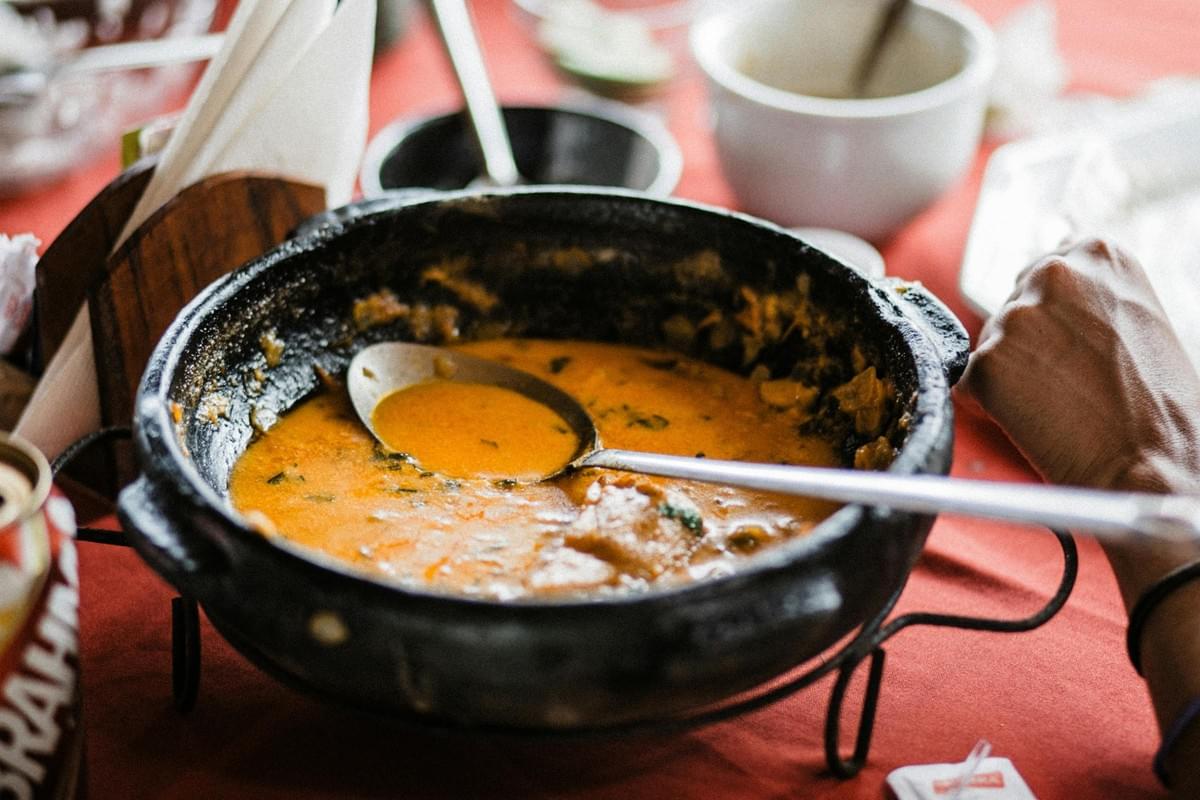
The first thing I noticed wasn’t the curry.
It was the pot.
Darkened by years of use, its sides carried the marks of countless meals. The apartment block outside had seen renovations, fresh coats of paint, and new neighbours come and go. But the pot remained, *quietly,*on the stove like an elder with stories to tell.
Inside, the curry simmered gently.
The surface rippled with orange-gold swirls of coconut milk and spices. Curry leaves floated lazily between chunks of chicken and potatoes softened by hours of cooking. The aroma filled the kitchen in waves, first the sweetness of onions, then the warmth of turmeric, coriander, and chilli, followed by the rich, comforting scent of coconut.
I remember standing beside the stove, completely mesmerised.
The auntie cooking didn’t use measuring spoons. There was no recipe book propped open nearby. She moved entirely by instinct.
A spoonful of rempah.
A pinch of salt.
A quick taste.
Then another stir.
When I asked how she knew the curry was ready, she smiled and said, “You’ll know when it smells right.”
At the time, I laughed because it sounded impossible.
I wanted instructions. Timings. Exact measurements.
Instead, she gave me something far more valuable:
Patience.
The more I watched, the more I realised that good curry isn’t about rushing toward the finished dish. It’s about paying attention to every stage along the way.
The onions needed time to release their sweetness.
The spices had to bloom in the oil before the coconut milk was added.
The potatoes needed to soften without falling apart.
Every step mattered.
Growing up in Singapore, curry was always present, at family gatherings, at hawker centres, during festive celebrations. Yet every version felt slightly different.
Some were fiery and peppery.
Others were creamy and rich.
Some leaned towards Indian cuisine, while others reflected Malay, Peranakan, or Eurasian influences.
That’s one of the things I love most about Singapore food: a single dish can tell multiple stories at once.
Every family adapts recipes in small ways. Every cook leaves behind a signature.
And somehow, all those influences coexist on the same table.
When the curry was finally served, we ate it with steaming white rice.
The gravy was velvety and fragrant, coating every grain. The chicken was tender enough to pull apart with a spoon. The potatoes had absorbed the spices completely, turning creamy and almost buttery inside.
For a few minutes, nobody spoke.
That’s something I’ve noticed during many of my food walks and family meals: when food truly connects with people, conversation pauses.
Not because there’s nothing to say.
Because everyone is fully present in the moment.
As I sat there eating, I realised the curry pot wasn’t special because it was old.
It was special because it had been part of so many ordinary days.
Weeknight dinners.
Birthday gatherings.
Festive celebrations.
Comfort meals after difficult moments.
The pot had witnessed all of it.
And maybe that’s what makes Singapore’s food culture so meaningful to me.
The dishes we celebrate aren’t just recipes. They’re vessels for memory.
They carry family habits, migration stories, cultural exchanges, and everyday acts of care. The flavours change slightly from one household to another, but the intention remains the same: feeding people, bringing them together, and passing something meaningful forward.
That old curry pot taught me that food isn’t only about what’s on the plate.
Sometimes, it’s about the hands that keep stirring.
The recipes that never get written down.
And the quiet traditions that continue long after the buildings around them have changed.
💌 With curious taste buds,
Maia Tan
