

Guan Hoe Soon sits on Joo Chiat Road, and I'd walked past it more times than I can count without stopping. That afternoon I finally did.
Outside, Joo Chiat was doing what it always does. Motorbikes leaning against pastel shophouses. An old man watching the street from a plastic chair. The smell of someone's lunch drifting out of a doorway. This stretch of the East has a way of holding onto its past without making a fuss about it, and the restaurant fits that mood exactly.
It's been here since 1953. That number sits quietly on the wall and on the menu, not shouted, just stated. Singapore's oldest Peranakan table, some people call it. I came in curious about whether that longevity meant anything on the plate, or whether it was just a nice line for the tourists.
A Room That Stopped Trying to Impress a Long Time Ago
The space runs across two shop lots, and the decor is simple in a way that feels honest rather than neglected, perfectly reflecting the unpretentious charm of Guan Hoe Soon, a beloved peranakan restaurant in Singapore's Joo Chiat area.
For another look at how old-school food spaces preserve Singapore’s dining memory, Maxwell Food heritage stalls tell a similar story of recipes, routine, and time.
Authentic Atmosphere
- Round marble tables cool to the touch, worn smooth by decades of elbows and rice bowls
- Colourful tiles running along the lower walls, the kind you see in old Peranakan households
- A display cabinet in the corner holding bits and pieces—porcelain and trinkets that have quietly witnessed Singapore's food history and the evolution of Singapore's kopitiam culture
This isn't a restaurant dressed up to look like heritage. It's a place that simply stayed long enough for heritage to gather around it. The restaurant name, Guan Hoe Soon, combines the names of the founder's three sons, a nod to the strong peranakan family roots that keep this place alive. There's a difference, and you feel it the moment you sit down.
It was livelier than I expected. A large family had pushed two tables together near the back, dishes crowding the marble, everyone reaching across one another. The air was filled with the mingling aromas of spices, coconut milk, and fresh peranakan dishes. A fan turned somewhere. Plates clinked. Nobody was whispering.
If you're after soft lighting and a hushed room where the waiter describes each course like poetry, this isn't that. And I think it's better for it.
The Food Arrived Without Ceremony
I'd come with a friend, and we ordered the way you're meant to here, for sharing. A soup, a couple of old dishes we'd both grown up hearing about, and rice.
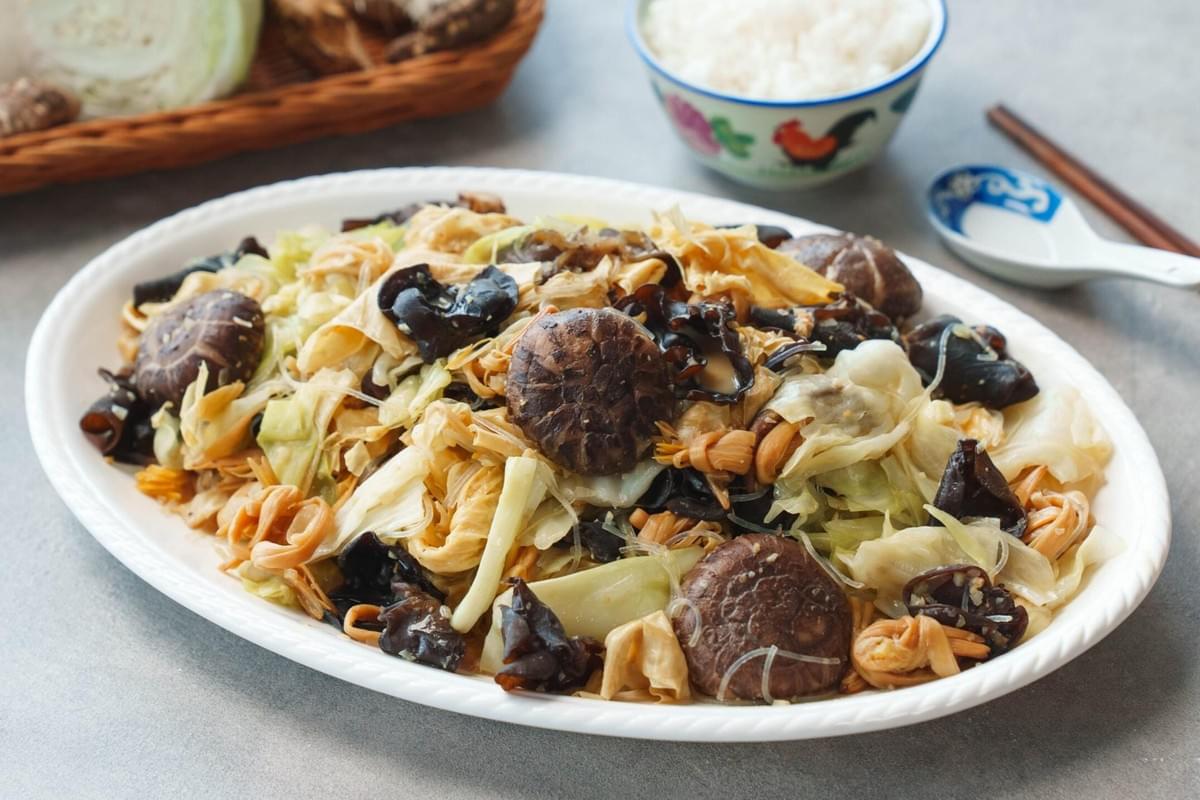
Nyonya Chap Chye
The Nyonya Chap Chye (from S$15.80) came first.
It's a humble thing, this dish. Braised mixed vegetables—cabbage, glass noodles, black fungus—all softened together in a savoury, faintly sweet gravy that carries the original taste cherished in peranakan households. The cabbage had gone properly tender, almost melting, soaking up all that slow-cooked flavour. My grandmother used to make a version of this, and I'll be honest, hers had a little more punch. But there was comfort in this bowl. It's the sort of dish you eat without thinking, spooning it over rice, reaching for more before you realise you have.
Hee Peow Soup
Then the Hee Peow Soup (from S$20.80).
Fish maw soup is the quiet one at any peranakan table, and it played that role here. The broth was clear and gentle, warm rather than hot, with the fish maw giving that springy softness that doesn't really taste of much on its own but carries everything around it. This dish, beloved by the peranakan community, showcases the skill of the restaurant cooks who respect the delicate balance of flavours.
It's not a dish that announces itself. It sits beside the richer things and lets them shine, offering your palate somewhere to rest between heavier mouthfuls. I found myself returning to it more than I'd planned, especially after the ayam buah keluak arrived and started demanding attention.
The Dish That Tastes Like Time: Ayam Buah Keluak
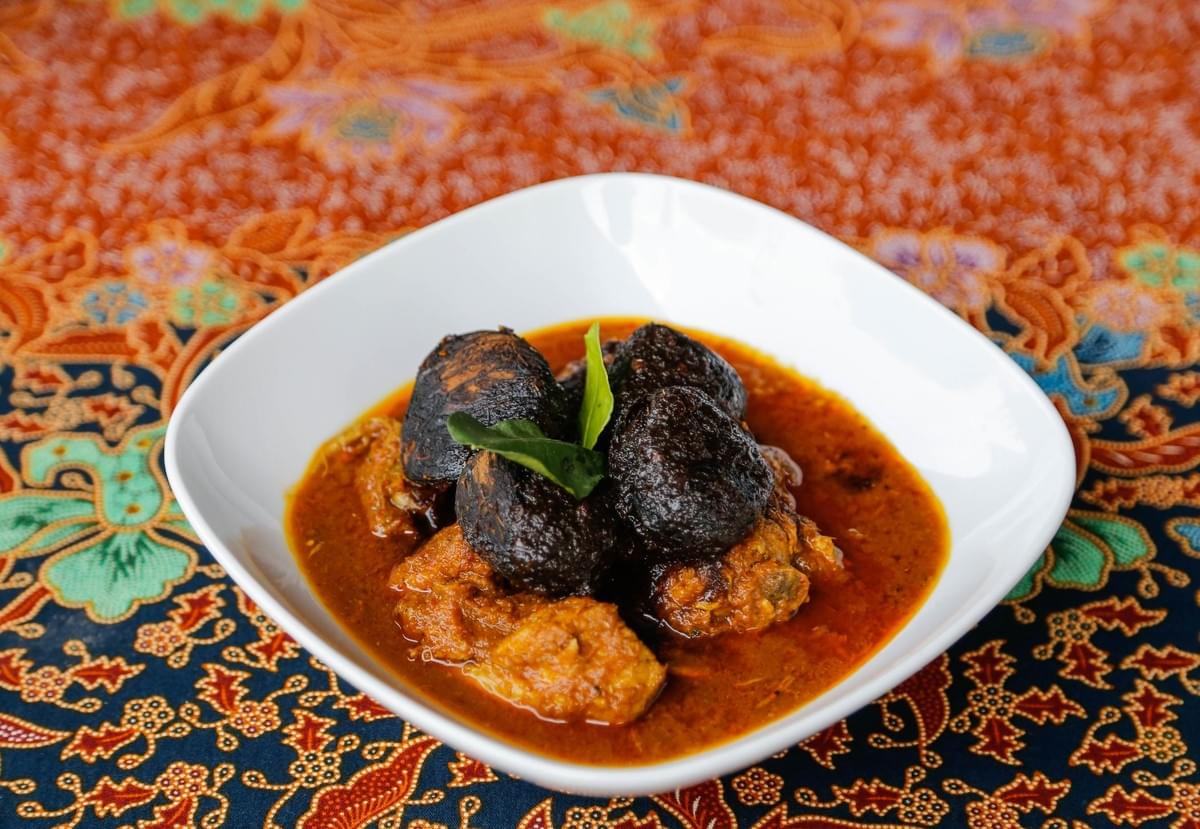
The Ayam Buah Keluak (from S$18.80) is why you come to a place like this.
If you've never had it, buah keluak is a black nut that has to be soaked and cleaned for days before it's even safe to cook. Then it is simmered with chicken until the flesh inside turns dark, soft, and deep. There's nothing quick about it. You can't rush buah keluak, and I think that's precisely the point.
It arrived looking almost forbidding: dark gravy, dark nuts, chicken pieces sitting in a sauce the colour of wet earth. Not pretty. Not trying to be.
The first spoonful over rice stopped me for a second.
My Taste Test
It's earthy in a way that's hard to explain to someone who hasn't tried it. Bitter and rich at once, a little like very dark chocolate that took a wrong turn into something savoury. The kind of flavour you either grew up with or spend a while learning to love. I scooped the soft paste out of one of the nuts with the tip of my spoon and mixed it into the gravy, and there it was, that old, acquired depth that no shortcut can fake. This dish, a favourite in many peranakan households, is a testament to the ah gong's treasured recipes passed down through generations, now lovingly preserved by granddaughter Jenny Yap and the head chef.
My friend, who didn't grow up eating it, took a careful bite and went quiet. Then took another. That's usually how it goes with buah keluak. It doesn't win you over with charm. It wins you over slowly, then completely.
We ordered extra nuts, S$3 each, and cleaned out every one.
The One That Fell a Little Short: Ngoh Hiang
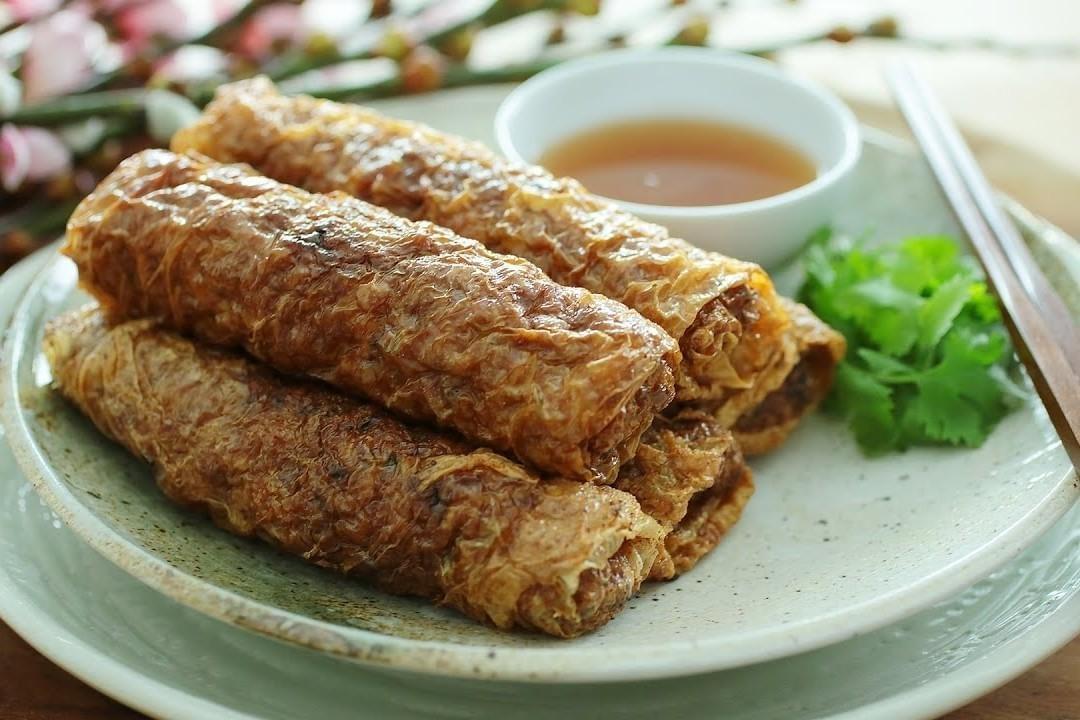
The Ngoh Hiang (from S$16.80) was the dish I was most looking forward to, and the one that left me slightly wanting.
Fried beancurd skin wrapped around seasoned minced pork, sliced and served for sharing. The skin had a good crisp to it, and the filling was properly savoury, that familiar old-school flavour I remember from family gatherings and old Singapore's kopitiam culture plates.
My Taste Test
It was good. Genuinely. But the portion felt modest for the price, and I'd have happily paid the same for a little more. That's my one real gripe with the meal, and it lines up with something I'd heard before I came, that a few dishes here can feel small against what you're paying.
I don't say that to warn you off. I say it because it's true, and you should know it going in. The food is honest. The value, on some dishes, asks a little patience from your wallet.
Service That Knows What It's Doing
The staff here aren't performing. They're working.
Dishes came out quickly, in the order that made sense, without a fuss. When we had a question, the answer was practical and short. This is old-school service, the kind that assumes you know roughly what you want and gets on with feeding you.
My Taste of Tip: If there's something special you're after, call ahead. Certain dishes, like their traditional Nonya roast pork, aren't always on the menu and need to be reserved in advance. Worth doing if you've got a group and a bit of forward planning in you.
What to Know Before You Go
Guan Hoe Soon is at 200 Joo Chiat Road, #01-01, Singapore 427471. Bus 33 stops nearby, and if you're coming by train, Eunos or Paya Lebar MRT followed by a short bus ride or walk will get you there. Drivers can use the public parking around the Joo Chiat area rather than expecting a spot out front.
Reservations and Pricing
Reservations are wise, especially for groups or weekend dinners. Call 6344 2761 to book or to arrange takeaway and any off-menu dishes.
Expect to spend around S$20–30 per person, depending on how much you order and how many of you there are. Sharing across a table is where this food makes the most sense, both for the flavour and the bill.
Opening Hours and Suitability
They're generally closed on Tuesdays, with lunch and dinner service the rest of the week, though hours shift a little by day, so it's worth a quick check before heading down.
Come here if you love traditional authentic peranakan cuisine rather than modern reinventions. Come with a group who'll share. Come if you're exploring Joo Chiat and Katong and want a real taste of what this neighbourhood has held onto. It's less suited to solo diners chasing one quick plate, or anyone expecting fine-dining polish and generous portions for the price.
If this meal leaves you curious about the sweeter side of Peranakan cooking, explore the colourful world of Nyonya kueh and how these traditional treats still shape Singapore’s Peranakan food culture.
The Verdict, Such As It Is
I left full and thinking.
Guan Hoe Soon isn't flawless. The ngoh hiang could have been more generous. The room is plain. The service won't hold your hand. And yet none of that is really the point.
What stays with me is that buah keluak. Dark, patient, unhurried, tasting of a process that refuses to be sped up. In a city that rebuilds itself every few years, there's something quietly moving about a table that still cooks the way it did in 1953, because that's simply how the dish is meant to be made.
