

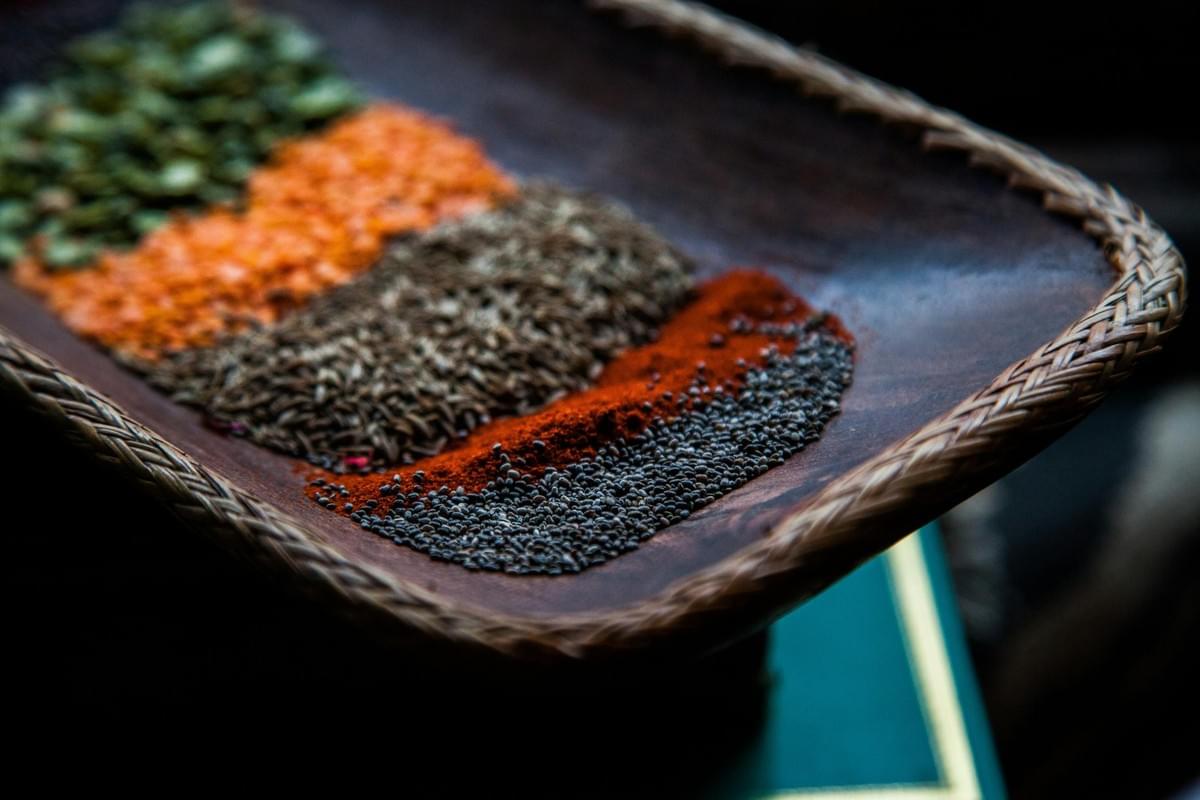
The first warning is always the smell.
Not because it is unpleasant—quite the opposite. Once shallots, garlic, chillies, lemongrass, and other aromatics begin surrendering themselves to hot oil, rempah has a habit of announcing itself beyond the kitchen. I remember making a batch at home and realising, much too late, that the fragrance had travelled into the corridor. Spicy, citrusy, slightly sweet: dinner had become public knowledge.
I used to think rempah was simply a spice paste. Blend everything, fry it, move on.
Then I learned to wait.
That, I think, is the secret of rempah. The ingredients matter enormously, but so does what happens after the pounding or blending. A raw rempah can taste sharp and disconnected. Give it enough time over heat, though, and something changes. The paste darkens. Its moisture slowly cooks away. The oil begins to separate, while those individual aromas soften into something deeper and rounder.
You can hear the transformation too. The wet spluttering gradually becomes a gentler sizzle. I have learned not to trust the clock as much as my nose.
Rempah also tells us something wonderful about Singapore cooking. Versions of aromatic spice pastes appear throughout Malay and Peranakan kitchens, forming the foundations of curries, sambals, laksa gravies, and slow-cooked dishes. Recipes differ between families because food rarely travels through generations unchanged. One cook adds more chilli. Another insists on extra lemongrass. Someone's grandmother knows exactly how much belacan belongs in the mixture without ever reaching for a measuring spoon.
That is the part I find most fascinating when writing for My Taste of Singapore. Behind many dishes we recognise instantly is work we rarely see: peeling shallots, chopping aromatics, pounding spices, and standing over a stove long enough for a rough paste to become something extraordinary.
These days, whenever I cook rempah, I resist the temptation to hurry it. I watch the colour deepen and wait for that moment when the raw sharpness disappears.
Maybe there isn't really a secret ingredient after all.
Maybe the secret of rempah is simply knowing when not to interfere—giving heat, spice, and time enough room to finish the story themselves.
💌 With curious taste buds,
Simon Lee’s Flavor Notebook
