


Watch a murtabak being made and you'll notice the dough does the talking first. A small ball gets stretched until it's nearly see-through, then vanishes under egg, onion, and spiced minced meat before it meets a hot pan with a sizzle. I find that moment fascinating because the finished bread hides how much skill went into it.
At My Taste of Singapore, I like following dishes whose stories run deeper than their flavor. Murtabak in Singapore is one of the best examples I know. It is a savoury, pancake-like stuffed bread popularised by Indian-Muslim cooks that gradually became a familiar comfort food in Singapore.
What Is Murtabak, and How Is It Different from Roti Prata?
So, what is murtabak? It's a stuffed flatbread. The cook stretches dough into a thin sheet, adds a savory filling, folds the dough around it and cooks the parcel on a hot griddle. In Singapore, it's commonly found with various fillings, including egg, onion, spices, and minced meat, usually mutton, chicken, or beef. It's then sliced into pieces and served with curry sauce.
Roti prata uses a similar dough, and that's where people get confused.
- Prata: a pan-fried flatbread that can be plain or cooked with egg, onion, cheese or sugar.
- Murtabak: the bigger, stuffed sibling, built around its filling.
I wouldn't draw the line too sharply, though. Filled pratas and modern creations blur it all the time.
How Murtabak Reached Singapore's Indian-Muslim Kitchens
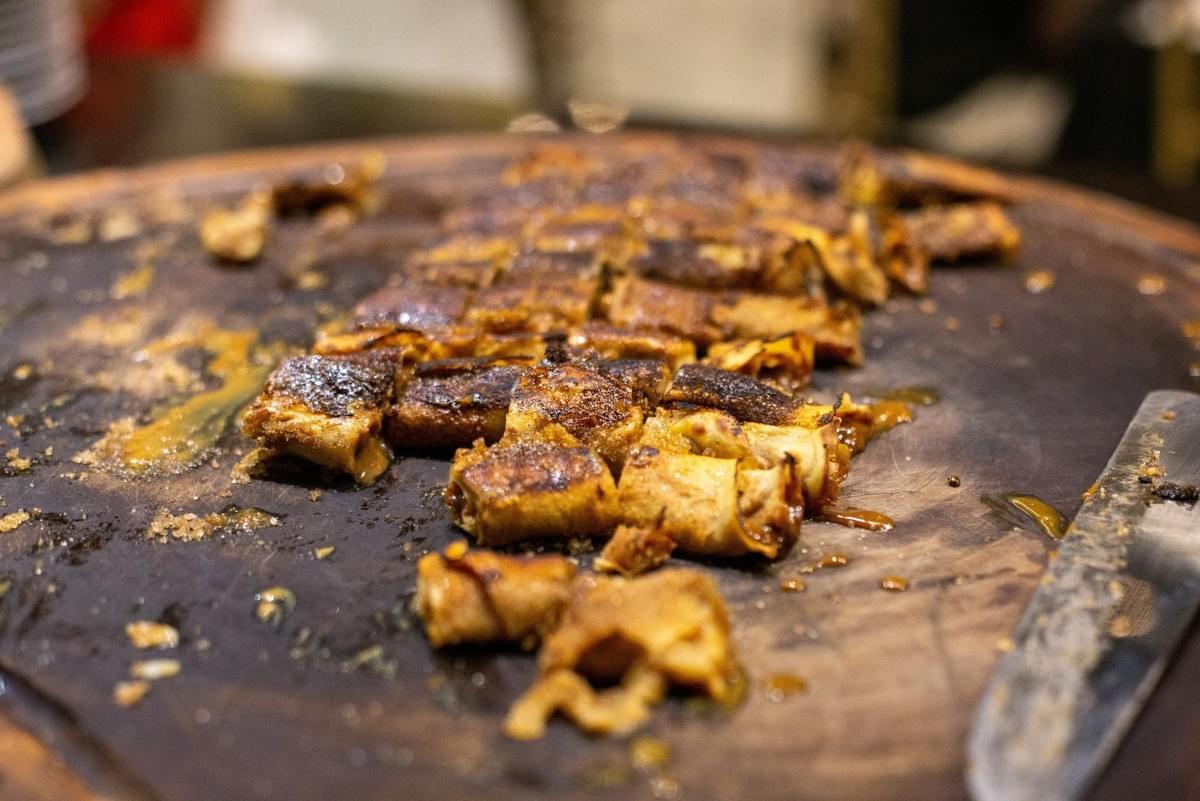
I'll be honest about the limits here: nobody can point to one confirmed birthplace for murtabak. Related stuffed breads appear across South Asia, the Middle East, and Southeast Asia, including Malaysia and Indonesia. The exact route the dish traveled remains unsettled.
What we can say is more specific and, I think, more interesting. The National Heritage Board (NHB) identifies murtabak as one of the foods popularized by Malabar Muslim-run eateries in Singapore. The dish arrived with people, not as a menu trend.
Simon Says: Indonesian martabak telur is a close cousin, a savory egg-filled martabak often made with meat and aromatics. Still, it isn't an exact match for Singapore murtabak. In Indonesia, "martabak" can even mean a sweet version, which is a completely different dish.
North Bridge Road, Sultan Mosque, and the Making of a Tradition
If murtabak has a home address in Singapore, it's the stretch of North Bridge Road near Sultan Mosque. NHB records that Singapore Zam Zam was founded in 1908, Victory Restaurant in 1910 and the former Singapore Restaurant in 1911. All were set up by Malabar Muslim entrepreneurs who helped make murtabak famous along this road.
NHB's heritage trail notes that South Indian entrepreneurs ran food businesses here, including stalls selling murtabak and biryani. The story of Kampong Glam is a story of merchants, worshippers, and cooks sharing the same streets. Murtabak became one of the dishes that tied them together.
The Anatomy of a Delicious Murtabak: From Thin Dough to a Golden, Pan-Fried Bread
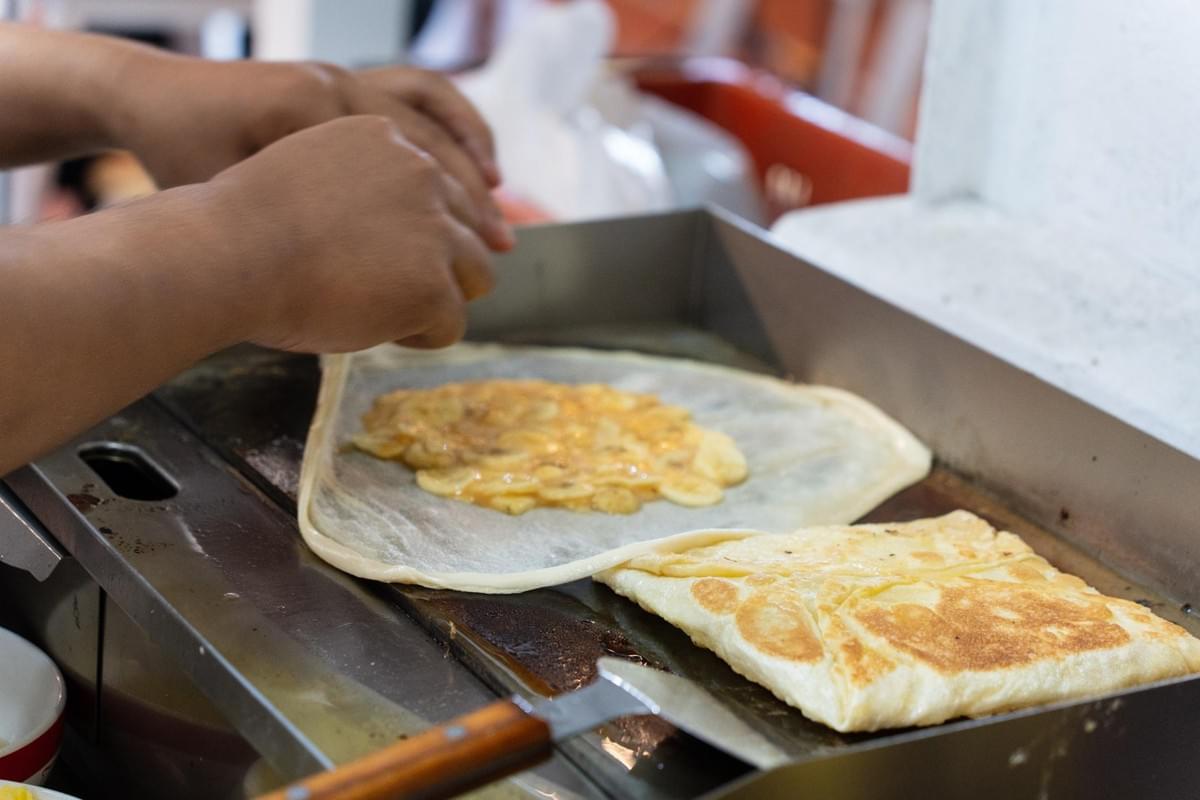
The method looks simple. It isn't. Here's how it works, step by step:
- Stretch: A rested dough, typically made from a mix of flour, water, salt, and fat, is worked until it becomes a very thin sheet. Oil, ghee or, in some recipes, butter may be used in preparing the dough, and every kitchen has its own recipe.
- Fill: Minced meat, egg, and onion go on top. Some versions add green onions or cheese. The filling has to be spread evenly so it cooks through.
- Fold and fry: The dough is folded into a parcel and pan fried on a hot griddle with oil or ghee. The outside browns while the egg and meat set inside.
- Slice and serve: The warm bread is sliced and served with a bowl of curry.
Generous fillings are tempting, but I've learned to respect the balance. Too much filling makes the parcel hard to cook evenly, and that's how you end up with a doughy center.
Simon Says: Eat your first piece plain. Then dip the next one in curry. You'll taste the crispy shell and the seasoning far more clearly before the gravy joins in.
Why Mutton Murtabak Became a Familiar Favorite
Mutton murtabak is the version many of us picture first. Minced mutton holds up well to bold seasoning, and recipes may include spices like cumin, which brings an earthy aroma, or turmeric, which adds color and flavor. I'd stress "may," though. No single spice blend is universal, and that variety is part of the charm.
The curry plays a different role from the bread. The murtabak brings the stuffed crunch, sometimes with a buttery richness from the fat used in the dough or cooking. The curry brings moisture, spice, and another layer of taste. One mistake worth avoiding is judging a murtabak by its color. A darker crust or stronger spice can simply reflect a different style. Undercooked egg or meat, however, is a real red flag.
Victory Restaurant, Al-Tasneem, and the Recipes That Survived
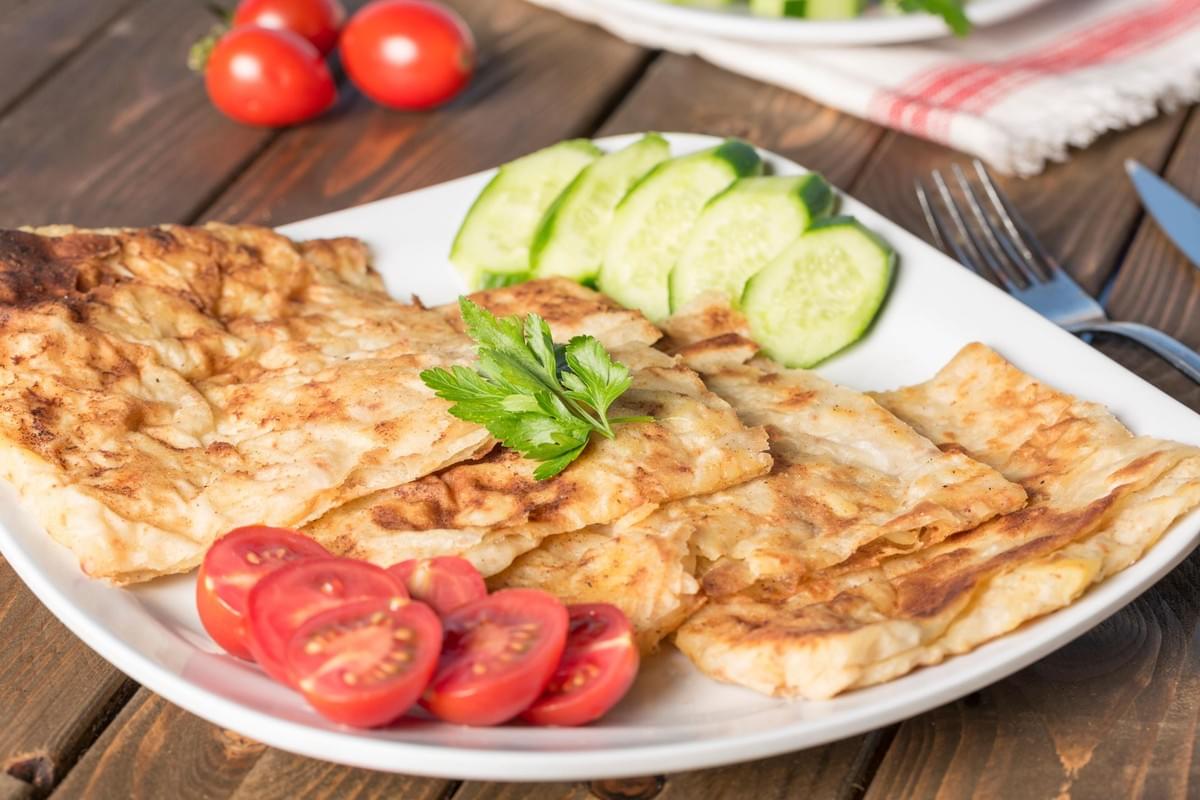
Victory Restaurant, at 701 North Bridge Road, gives us one of the best-documented accounts of the craft. NHB describes its dough being stretched extremely thin, then filled with egg, cheese, and seasoned meat before it's cooked on a hot plate. Passers-by would stop to watch. Its family recipes have been kept across generations. Customers return for decades and bring their children and grandchildren along. Singapore Zam Zam's repertoire, meanwhile, includes mutton, beef, chicken, and sardine murtabak.
A few doors along at 709 North Bridge Road, Al Tasneem shows how far the format stretches. Its delivery menu lists beef, chicken, and mutton murtabak, plus the Remix Special and the Osama open-face murtabak.
How Springleaf Prata Place Shows Murtabak Evolving
Murtabak has long since left North Bridge Road. Springleaf Prata Place's offers chicken, mutton, sardine, and vegetable murtabak, as well as Ultimate and Mini Ultimate versions, with cheese and mushroom add-ons.
Modern versions elsewhere may incorporate mozzarella cheese and mushrooms, while fish-based fillings such as sardines offer another alternative to meat. These additions are better understood as fillings rather than toppings, and they aren't all part of the same historical recipe. What I think keeps them recognizable is the core: stretched dough, a stuffed parcel, and a pan-fried finish.
Eating Murtabak Together: Nasi Briyani, Teh Tarik, and the Shared Table
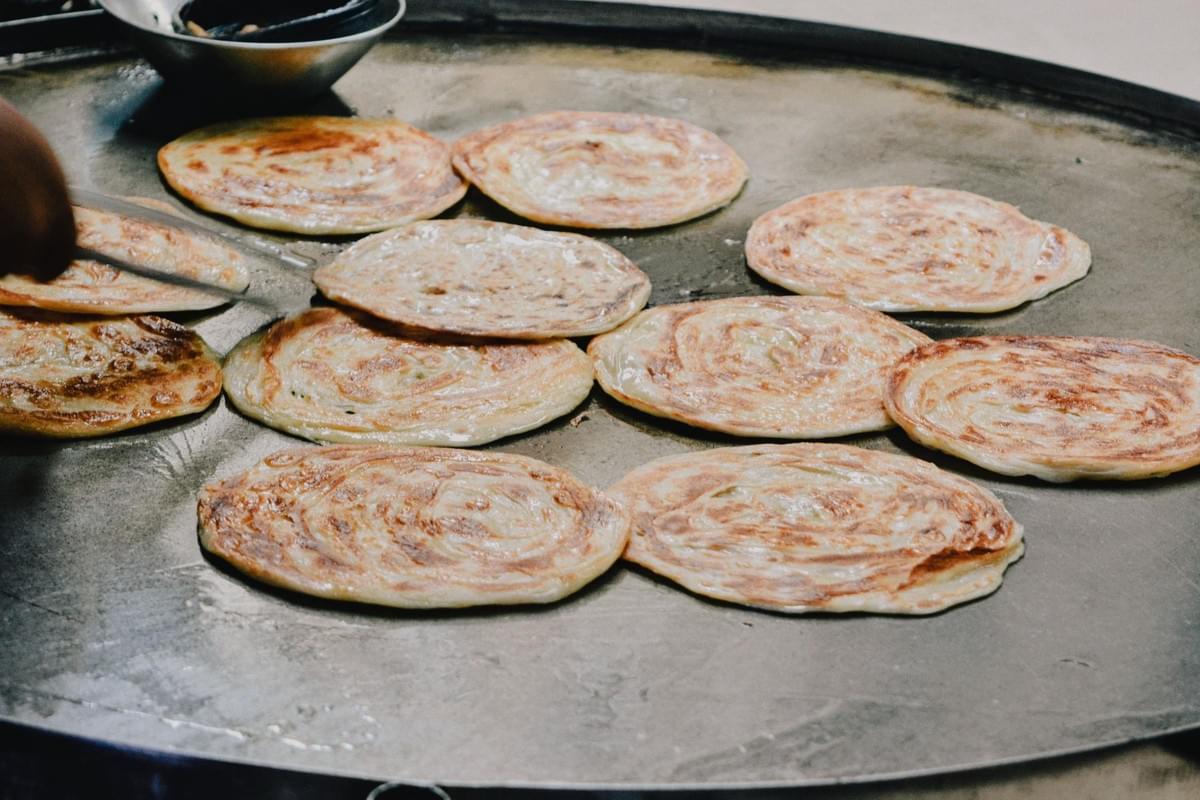
You'll usually find murtabak on the same menu as nasi briyani, roti prata, and teh tarik. They're distinct dishes, but together they show the range of Singapore's Indian-Muslim restaurants. A glass of sweet, milky teh tarik beside warm, savory murtabak is a contrast I think works beautifully.
Unlike a plate of rice or a bowl of chicken curry, a murtabak arrives already sliced. One person orders, and several hands reach in. That's why I'd suggest ordering one to share and asking how big the portion is first. Murtabak is often made to order, and maintaining consistent quality means allowing enough time for the filling to cook through and the bread to brown evenly, especially during busy lunch and dinner hours.
Simon Says: If you want murtabak for supper, though, check each restaurant's opening hours first. Not every stall runs late.
The Dough Remembers
The next time you eat murtabak, think about the hands behind it. Someone stretched that dough thin, folded it around a filling and cut it for the table, just as cooks on North Bridge Road have done for more than a century. Order one and share it. That's how a delicious murtabak is meant to be eaten.
FAQ: Murtabak Mysteries, Answered
- Is murtabak always spicy?
No. The heat depends on the recipe. Taste the curry separately if you prefer milder food. - Does every murtabak contain egg?
Most meat-filled versions do, but recipes vary. If you have an allergy, ask the restaurant. - Is all Singapore murtabak halal?
Don't assume so. Check a restaurant's current certification with MUIS. - Is murtabak a snack or a full meal?
Both. A small one makes a snack, while a large mutton murtabak with curry can fill you up for lunch.
