

I remember the first time I noticed it.
Not the noodles. Not the prawns. Not even the generous splash of dark soy sauce coating the plate of char kway teow in front of me.
It was the smell.
A faint smokiness drifted upward with the steam, carrying something deeper than seasoning. It smelled warm, slightly charred, and impossibly inviting. The dish seemed to have absorbed the energy of the fire itself. I took a bite and immediately understood why Singaporeans speak about wok hei with such affection.
For years, I thought wok hei was just another ingredient. Surely it was a sauce, a spice blend, or some secret hawker trick. But the more I cooked at home and watched hawkers at work, the more I realized it was something harder to define.
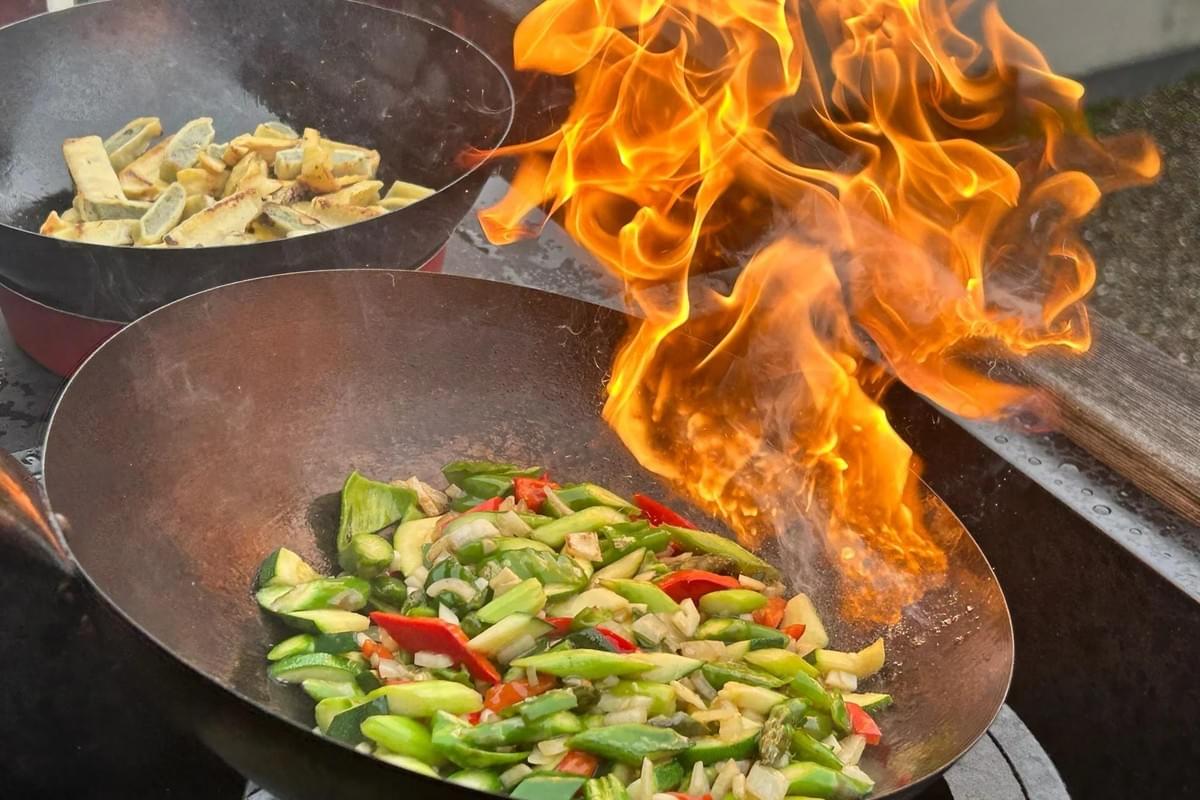
Wok hei literally translates to "breath of the wok." It happens when ingredients meet intense heat, creating a combination of caramelisation, smoke, and aroma that gives stir-fried dishes their distinctive character. It's not something you can pour from a bottle or measure with a spoon. It exists in a fleeting moment between fire, metal, and movement.
Watching a hawker chase wok hei is almost like watching a performance. Flames leap up the sides of the wok. The spatula moves with practiced confidence. Noodles, rice, and seafood tumble through the air before landing back into the heat. There is speed, but also precision. Every second matters.
I learned this the hard way when I tried recreating char kway teow at home.
The ingredients seemed simple enough. Flat rice noodles. Bean sprouts. Eggs. Chinese sausage. A hot pan. Yet what emerged from my kitchen tasted good—but not quite right. The noodles lacked that smoky depth I associated with hawker versions. They were missing the soul of the dish.
That experience gave me a new appreciation for Singapore's hawkers. Wok hei isn't just a technique; it's years of repetition. It's understanding exactly when to toss, when to wait, and when to let the fire do the work. The best hawkers make it look effortless, but anyone who has tried cooking over high heat knows otherwise.
What fascinates me most is how wok hei has become part of Singapore's food identity. Mention char kway teow, Hokkien mee, or fried carrot cake, and the conversation often turns to whether the stall has enough wok hei. It's one of the few culinary qualities that people actively seek out but struggle to describe.
Maybe that's because wok hei isn't purely about taste.
It's about memory.
It's the smell that drifts across a hawker centre before you even see the stall. It's the sound of a spatula scraping against a hot wok. It's the anticipation that builds while watching flames dance beneath a mountain of noodles.
For many Singaporeans, those moments are woven into everyday life. We grow up surrounded by them, often without realizing it.
And perhaps that's why our love affair with wok hei endures.
It's not simply about smoke or fire. It's about craftsmanship, heritage, and the small moments that turn a good plate of food into something unforgettable. Long after the last bite is gone, that smoky breath lingers in memory, reminding us that some of the best flavours cannot be written into a recipe.
💌 With curious taste buds,
Simon Lee's Flavor Notebook
